- Property Management Brief
- Posts
- Board Continuity & Leadership Resilience Strategy
Board Continuity & Leadership Resilience Strategy
In partnership with


Good morning!
Memorial Day reminds us that real leadership is rooted in service and sacrifice. We honor those who gave their lives for our country, and we carry that spirit forward by showing up for each other with purpose and integrity every day.
— Lucas Robinson, Founder & CEO at BudgetMailboxes.com
🎯 This Week’s Strategy:
Board Continuity & Leadership Resilience Strategy
🤝 Boardroom Brief:
Florida Property Tax Reform Debate Raises Major Concerns for Property Managers
Strategy
🎯 Board Continuity & Leadership Resilience Strategy
Strong leadership continuity is one of the most important yet overlooked factors in successful property management operations. Many firms rely heavily on a small group of experienced leaders, regional managers, or long-tenured staff members whose departure can create operational disruption, communication breakdowns, and reduced client confidence. A Board Continuity & Leadership Resilience Strategy helps property management companies prepare for leadership transitions proactively while ensuring institutional knowledge, operational consistency, and decision-making stability remain intact.
As staffing challenges, burnout, and leadership turnover continue to impact the industry, organizations that invest in leadership resilience are better positioned to maintain service quality, retain clients, and navigate periods of change more effectively.
How Property Managers Can Implement a Board Continuity & Leadership Resilience Strategy
1. Identify Critical Leadership Roles and Risks
The first step is understanding where leadership vulnerabilities exist within the organization. Certain roles may hold significant operational knowledge or client relationships that are difficult to replace quickly.
Action Steps:
✅ Identify key leadership positions across operations, maintenance, finance, leasing, and client relations.
✅ Assess which roles are highly dependent on individual expertise or long-term relationships.
✅ Document core responsibilities, recurring processes, and decision-making authority for each role.
✅ Develop contingency plans for unexpected leadership departures or transitions.
2. Create Structured Knowledge Transfer Systems
Organizations become more resilient when knowledge is shared rather than concentrated within a few individuals. Standardized systems reduce disruption during transitions.
Action Steps:
✅ Maintain centralized digital documentation for operational procedures, vendor contacts, client preferences, and compliance requirements.
✅ Create standardized onboarding and transition checklists for leadership roles.
✅ Record key workflows and recurring operational processes to preserve institutional knowledge.
✅ Encourage cross-training between departments to improve operational flexibility.
3. Develop Emerging Leaders Internally
Leadership resilience depends on building a pipeline of future leaders within the organization. Investing in internal talent development improves retention and succession readiness.
Action Steps:
✅ Identify high-potential employees and provide mentorship opportunities with senior leadership.
✅ Offer leadership development programs focused on communication, operations, financial management, and conflict resolution.
✅ Rotate team members through different operational responsibilities to broaden experience.
✅ Encourage participation in industry certifications, associations, and professional development events.
4. Strengthen Communication and Decision-Making Structures
Clear communication systems reduce confusion and ensure continuity during periods of leadership transition or organizational change.
Action Steps:
✅ Establish regular leadership meetings to align on operational priorities and long-term goals.
✅ Implement clear escalation protocols for operational issues and emergencies.
✅ Use collaborative project management and communication platforms to centralize information sharing.
✅ Ensure leadership responsibilities are distributed appropriately to avoid overdependence on a single individual.
5. Build a Culture of Stability and Adaptability
Leadership resilience is not just about succession planning. It is also about creating an organizational culture that can adapt to change while maintaining consistency.
Action Steps:
✅ Foster transparency around organizational goals, changes, and leadership development initiatives.
✅ Recognize and reward employees who contribute to team stability and collaboration.
✅ Encourage continuous improvement and adaptability across departments.
✅ Conduct regular reviews of leadership readiness and succession planning strategies.
Why It Matters
In property management, operational consistency and client trust are closely tied to leadership stability. Unexpected departures, leadership gaps, or inadequate succession planning can disrupt service delivery, increase employee turnover, and weaken client relationships. A strong Board Continuity & Leadership Resilience Strategy helps organizations reduce risk, maintain operational performance, and build a more agile leadership structure prepared for long-term growth and industry change.
As workforce challenges continue evolving across the property management industry, companies that prioritize leadership resilience today will be better positioned to navigate tomorrow’s operational demands with confidence and stability.
Crash Expert: “This Looks Like 1929” → 71,105 Diversifying Here
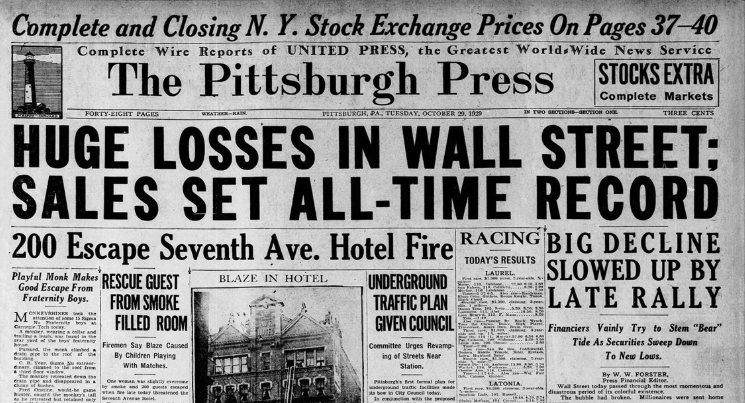
Mark Spitznagel, who made $1B in a single day during the 2015 flash crash, warned markets are mimicking 1929. Seems extreme but we did just see the worst quarter for the S&P since 2022.
So it’s not so surprising that Vanguard and Goldman Sachs forecasted 5% and 3% annual S&P returns respectively for 2024-2034.
Late last year, Apollo’s chief economist Torsten Slok put it this way: "expect zero in return in the S&P 500 over the coming decade."
Almost no one knows this, but postwar and contemporary art appreciated 10.2% annually with near-zero correlation to equities from 1995–2025 overall.*
And sure… billionaires like Bezos can make headlines at auction, but what about the rest of us?
Masterworks makes it possible to invest in legendary artworks by Banksy, Basquiat, Picasso, and more – without spending millions.
29 exits. Net annualized returns like 16.5%, 17.6%, and 17.8% on works held over 1 year+. $1.3 billion invested. 500+ offerings.*
Shares in new offerings can sell quickly but…
*According to Masterworks data. Past performance is not indicative of future returns. Investing involves risk. Important Reg A disclosures: masterworks.com/cd.
Boardroom Brief
Florida Property Tax Reform Debate Raises Major Concerns for Property Managers

Florida’s ongoing property tax reform debate is creating uncertainty for property managers, landlords, and multifamily operators as lawmakers consider proposals that could significantly reshape local government funding. Several plans under discussion would reduce or eliminate property taxes on homestead properties, potentially shifting more of the tax burden onto rental housing, apartment communities, second homes, and commercial properties. Local governments warn that reduced tax revenue could impact infrastructure, public safety, and community services, while also leading to new fees or alternative revenue measures. For property managers, the debate highlights growing concerns around rising operating costs, rental affordability, property valuations, and long-term investment planning across Florida’s housing market.
Game
🎉 Fun Finale: Play & Poll
What would be the biggest impact on property management operations if Florida significantly reduces property taxes on homestead properties?(Tap on your answer) |
 | Curious About AI? But Not Sure Where To Start?An on-demand sprint to help you decide what AI workflow to build first. |
Your ads ran overnight. Nobody was watching. Except Viktor.
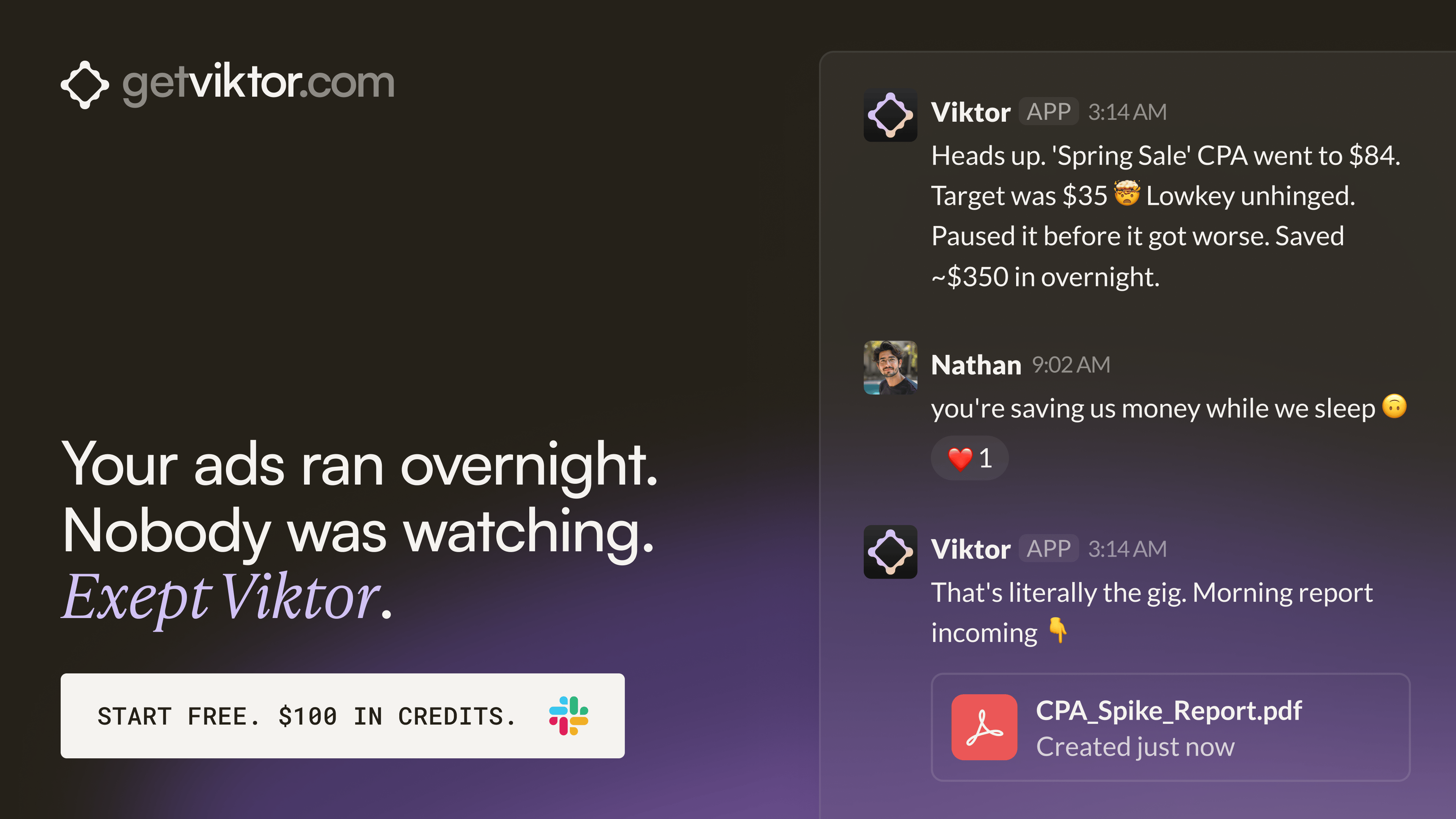
One brand built 30+ landing pages through Viktor without a single developer.
Each page mapped to a specific ad group. All deployed within hours. Viktor wrote the code and shipped every one from a Slack message.
That same team has Viktor monitoring ad accounts across the portfolio and posting performance briefs before the day starts. One colleague. Always on. Across every account.